Cake Stall Economics: Why Britain's Brand Budgets Are Moving to the Village Hall
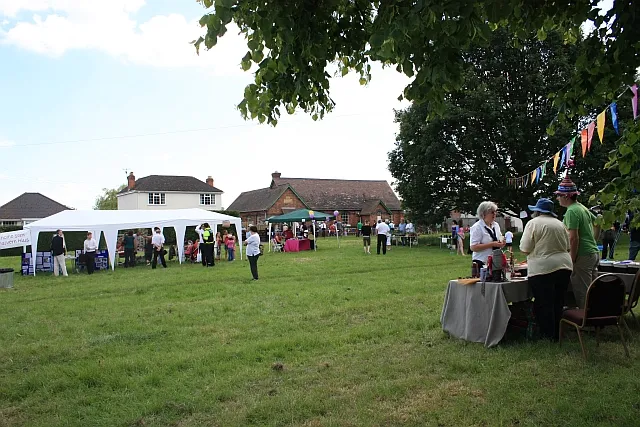
Photo: Bob Embleton, CC BY-SA 2.0, via Wikimedia Commons
There is a particular smell to a British church hall on a Saturday morning: instant coffee, slightly damp coats, and the faint whiff of a raffle prize that has been in someone's loft since 2019. This autumn, that smell has acquired a marketing budget. Somewhere between the cake stall and the second-hand book table, a brand logo is quietly doing more work than it would in a Shoreditch pop-up with a neon sign and a DJ.
The shift has been building for a while, but 2026 is the year it became a line item. Agencies that spent the past decade pitching immersive brand experiences in city centres are now being asked to quote for parish fetes, church hall quiz nights, school autumn fairs and the kind of local tombola where the top prize is a hamper and the second prize is a slight sense of disappointment. The budgets are smaller. The returns, strangely, are not.
The trestle table is the new activation space
Start with the maths. A six-figure activation in central London buys you a few thousand impressions, a handful of influencer posts and a venue hire invoice that makes the finance director go quiet. A £200 raffle prize, a £2,000 sponsorship of the hall hire, and a modest fee for a local creator buys you something different: a room full of people who actually live in the area, a mention in the parish newsletter, and a photo on the village Facebook group that will still be circulating in 2029.
The cost per genuine conversation is not close. Nor is the cost per repeat invitation — the real metric in hyperlocal marketing, because the organisers of a good fete talk to the organisers of other fetes. One well-behaved brand in a church hall in Cheshire becomes three bookings in Lancashire and a quiz night in Shropshire. It is the least glamorous growth channel in Britain, and it is quietly outperforming the ones with case studies.
Who is actually doing it well
The pattern shows up across a handful of brands that have been inching this way for years. Co-op's community fund has long been the quiet backbone of local events, and its local-store managers have become adept at turning a sponsorship cheque into a presence that does not feel like an intrusion. Nationwide has been leaning into branch-level community work as it talks up its mutual status. Yorkshire Tea has spent years positioning itself as the brew of the village hall, which is either brilliant strategy or simply the truth. Greggs, never shy of a local photo opportunity, has a knack for turning up where people already are rather than asking them to come to it.
The best examples share a trait: the brand is not the star. It pays for the hall, donates the raffle prize, maybe covers the printing of the programmes, and then gets out of the way. The worst examples — and there are more of them than the industry would like to admit — arrive with a clipboard, a lanyard and a content crew, and turn a community event into a brand shoot with a cake stall attached.
The brief: don't be the brand with the clipboard
This is where creators come in, and where most of the current experimentation is happening. The brief is not 'go viral'. It is 'go local, and do not flatten the thing you are covering'. Agencies are increasingly hiring micro-creators with genuine ties to an area — the person with 4,000 followers in Dumfries who actually knows the woman running the tombola — rather than national influencers who would need a train ticket and a briefing document to find the hall.
The rules of a good hyperlocal brief are emerging: turn up early, buy something, ask before filming anyone's grandmother, let the raffle draw breathe, and do not edit the event into a 15-second montage that makes it look like a festival. The content that performs is often the least polished — a phone-shot clip of a vicar deadpanning his way through a quiz question, or a creator genuinely losing a game of guess-the-sweets. The brand appears as a sponsor credit, not a punchline.
Why a £200 prize beats a £200,000 activation
Trust, mostly. A church hall is one of the few remaining spaces in British life where people have not yet developed an ad-blindness reflex. The audience is not scrolling. They are sitting on a plastic chair, holding a mug, and paying attention. A brand that behaves well in that room earns a kind of permission that no amount of programmatic buying can manufacture. It is the honesty-box principle applied to marketing: the transaction is small, the trust is large, and the relationship is expected to last.
There is also the measurement question, which is less murky than it sounds. Redemption codes, footfall at a local store, newsletter sign-ups, repeat invitations from organisers — these are all trackable. What is harder to track is the thing that actually matters: the moment a person says 'oh, they did the raffle at the fete' and means it as a compliment. That does not show up in a dashboard, but it shows up in the following year's booking.
The risk: turning the fete into a content shoot
The obvious failure mode is the brand gaze — the tendency to arrive at a community event and immediately start treating it as a set. Organisers are already wary of marketers who want to 'amplify' the fete without understanding that the fete is not a content opportunity; it is a social contract. The moment a sponsorship feels like a takeover, the room turns. British audiences are polite, but they are also forensic about insincerity.
The second risk is measurement pressure. Hyperlocal work is slow, and the results are lumpy. A brand that expects a viral moment from a quiz night will be disappointed. A brand that expects to be invited back will not be.
What good looks like
Pay the hall rent. Buy the raffle tickets. Let the organisers keep control of the running order. Brief creators to be guests, not correspondents. Sponsor the thing that costs money and creates no content — the heating, the printing, the prizes — and let the visible moments happen around you. Then do it again next year.
The best campaign in Britain this autumn might not be on a billboard or a TikTok. It might be on a strip of pink raffle tickets, £2 a go, with a brand name printed small at the bottom. That is not a downgrade. It is a different kind of reach.