The Unauthorised Highlights Reel: Britain's Podcasters Are Reclaiming the Mic From the Clip Farms
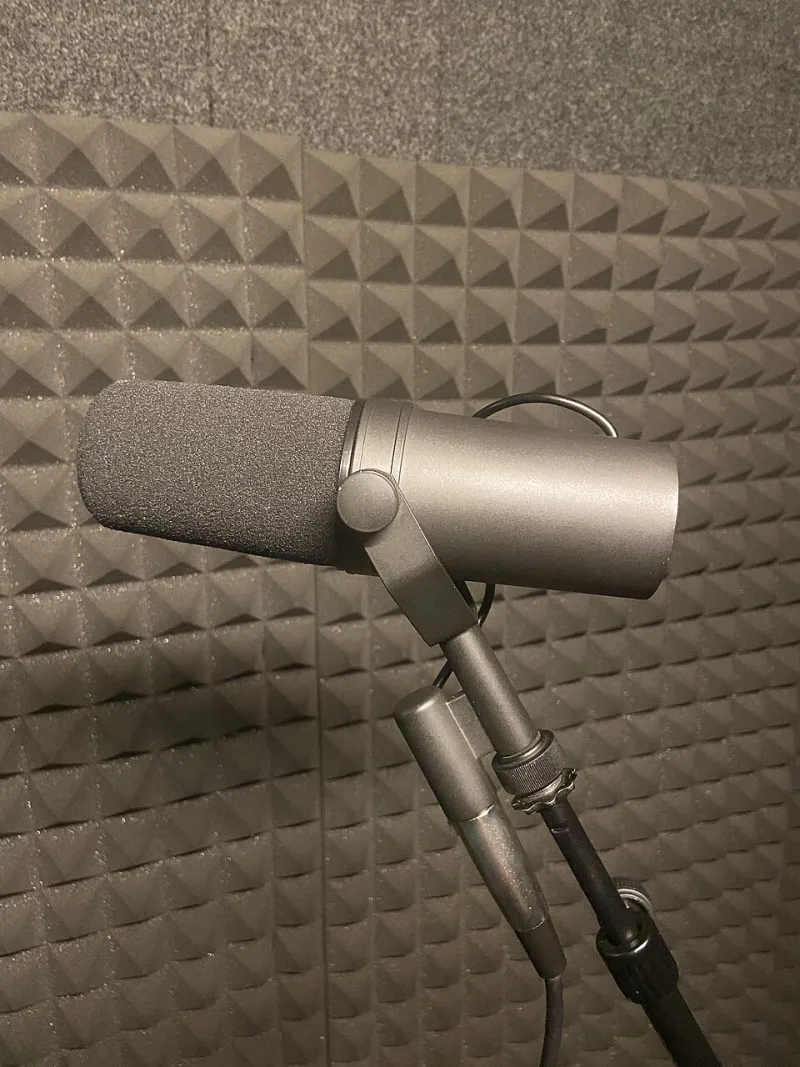
Photo: The Midnite Wolf, CC0, via Wikimedia Commons
There is a particular kind of modern indignity in discovering that your best joke, your most vulnerable confession or your genuinely decent point about the state of British rail has been sliced into a 47-second vertical video by an account you have never heard of. The caption is usually something like 'he COOKED here' and the comments are full of people asking where the full episode is. The full episode, meanwhile, is sitting on your feed with 312 views and a thumbnail you spent twenty minutes on.
Welcome to the clip farm dilemma. Over the past couple of years, AI-powered clipping tools have made it trivially easy to hoover up long-form podcasts, identify the punchiest moments and repackage them for TikTok, YouTube Shorts and Instagram Reels. For some UK podcasters, it has been a genuine discovery engine — a scruffy little episode from March suddenly finding an audience in November because a clip account with a decent following gave it a second life. For others, it has started to feel less like promotion and more like a stranger running a market stall outside your house using your stock.
How a Bumper Episode Became Someone Else's Payday
The economics are simple enough. A clip account builds an audience by posting other people's material. It monetises through platform ad revenue, affiliate links, sponsored posts or straight-up selling promo slots to brands. The original podcaster gets the vague honour of being 'blown up' by someone else's account, plus a handful of new listeners if they are lucky.
In the UK, this has been especially visible in the comedy, football and true-crime podcast spaces, where the raw material is plentiful and the personalities are recognisable. A clip of a comedian riffing on a bad date can travel further in a weekend than the full episode did in a month. But the creator is not usually the one clipping it. The clip farm is. And the clip farm is not usually sending a cheque.
The Legal Grey Area Is Doing a Lot of Heavy Lifting
Here is where the conversation gets uncomfortable. UK law does not offer a neat, standalone 'likeness' right in the way some US states do. If someone uses your voice or face without permission, your remedies are patchy: passing off, copyright in the sound recording, performers' rights, moral rights, maybe data protection if personal data is being processed. Each is a different tool with a different test.
The copyright in a podcast recording is often owned by the producer or the production company, not necessarily the host. Performers have rights in their performances, but those rights are typically licensed when the episode is made. A clip farm that takes a 90-second excerpt and repackages it commercially is unlikely to be covered by fair dealing — that defence is narrower than the internet likes to pretend. But proving it in practice is expensive, slow and deeply unglamorous.
There is also the consent question. A voice is not just a copyright asset; it is a person. The UK's data protection regime can bite if a clip is used to identify someone or build a profile of them. And with voice-cloning tools now cheap and convincing, the line between a fan-made highlight and a synthetic impersonation is getting thinner by the month.
The Platforms Aren't Exactly Rushing to Fix It
Platforms have little incentive to police this aggressively. Clips drive engagement. Engagement drives ad revenue. A takedown system exists, but it is reactive, form-heavy and often weighted toward whoever can afford to file the paperwork. For a solo podcaster in Leeds with a day job, chasing a clip farm with 400,000 followers is not a fun hobby.
YouTube, TikTok and Meta have all introduced monetisation schemes that reward original content, but enforcement is fuzzy. A clip with added captions, a zoom and a font that looks like a 2014 meme page can plausibly pass as 'transformative' to an automated system. Creators who have tried to file complaints describe a familiar cycle of automated responses, reinstated videos and a growing sense that the house always wins.
Meanwhile, the clipping tools themselves are having a moment. They are marketed to podcasters as growth engines — 'turn one episode into thirty pieces of content' — and many creators do use them legitimately on their own material. The problem is that the same tools work just as well on someone else's.
Why Some UK Podcasters Are Choosing to Opt Out
A small but growing number of UK creators are deciding that the clip economy is not worth the aggravation. They are switching off auto-clipping, watermarking their audio, restricting downloads, or moving full episodes behind paywalls and platform-exclusive windows. Some are simply asking their audience to clip responsibly and hoping for the best.
Opting out has a cost. Visibility is not a charity. If you disappear from the short-form feeds, you may also disappear from the discovery funnel that introduced you to half your audience. But for creators who have watched their words get repackaged into someone else's brand, the trade-off is starting to look less like a growth strategy and more like a boundary.
The Clip Economy Isn't Going Anywhere — But the Terms Are Up for Debate
The pragmatic middle ground is probably licensing. A clip farm that pays a small royalty, credits the source clearly and links back to the full episode is not the enemy. The enemy is the account that treats a podcast as free raw material and a creator as an inconvenient footnote.
Expect more UK podcasters to start publishing explicit clip policies, in the same way creators began publishing rate cards. Expect more legal noise around voice, likeness and performer rights. And expect the platforms to keep moving slowly until someone makes it their problem.
The clip is not the problem. The problem is who gets to own the moment after it leaves the microphone. Britain's podcasters are starting to ask that question out loud — and for once, the algorithm is not the only one listening.