Admin Will See You Now: How Britain's Village Facebook Groups Quietly Became Local Government
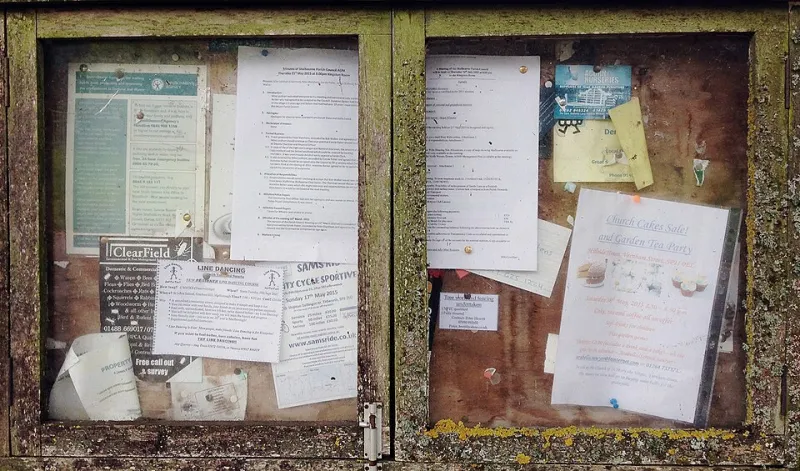
Photo: James Harrison , CC BY-SA 2.0, via Wikimedia Commons
Somewhere between a thread about bin day and a forty-comment row about a hedge, Britain rebuilt its public square. It isn't in the town hall, and it certainly isn't on X. It's a Facebook group called something like Spotted in [Town] — Official — No Selling, with 3,400 members, three volunteer admins and a pinned post that absolutely nobody has read.
In 2026 these groups are the most consequential piece of local digital infrastructure in the country. They set the tone for how a town talks to itself, they decide which businesses get a chance, and they generate more civic engagement than most council comms teams manage in a financial year. National brands, by and large, have no idea they exist.
The moderator is the new parish clerk
There is a person in every town who approves your join request at 11.40pm and has strong views about capital letters. They are unpaid. They are doing this after a full day at work. And they hold more practical power over local discourse than most elected members.
Admins have developed an entire legal system without anyone calling it that: post approval queues for new members, keyword blocks on the word 'free' to head off the scammers, Sunday trading windows, and a quiet, devastating tool called mute. The good ones run their group like a village hall committee with a grudge and a spreadsheet. The bad ones are the reason half the town has splintered into a rival group with a more forgiving moderation policy and a worse name.
Etiquette, enforced by passive aggression
British group etiquette is a remarkable artefact. Nobody says 'you're wrong'; they say 'not sure this is allowed but…'. Nobody argues directly; they ask a question that is very obviously an argument. The phrase 'no offence, but' is doing the work of a full legal disclaimer.
Requests fall into a handful of immovable categories. Can anyone recommend a plumber. Has anyone else's water gone off. Does anyone know what's happening on the high street. And the perennial: is this normal? The replies arrive within four minutes, half of them useful, the rest from a man who has appointed himself the group's authority on drainage.
There is also the naming-and-shaming economy. Dog fouling, bad parking, fly-tipping. It is justice at the speed of a smartphone camera, and it is largely effective.
The AI slop problem nobody budgeted for
Ask an admin what changed this year and the answer is rarely political. It's spam. Specifically, the polished, plausible sort — fake local business pages with stock photography and a mobile number that redirects, 'local news' sites that scrape a group post, rewrite it with a chatbot and serve it back as journalism, and Marketplace listings for a ride-on mower that has never existed.
This has handed hyperlocal groups an unexpected role: verification. When a shop claims to be opening on the precinct, the group is where the claim gets tested. Someone will walk past and photograph the shutters. Someone will know the landlord. The group has become the de facto fact-check layer for local commerce, and few brands realise they're being audited in public.
Council comms, unfiltered
Local authorities have landed in two camps. One treats the group as a hostile environment and broadcasts only into its own page, reaching roughly the same eleven people. The other has worked out that a plain-spoken post from a named officer, dropped into the town group with a date and a diversion route, does more for public trust than a press release.
Where it goes wrong is tone. Councils arrive in these spaces with the voice of a laminated leaflet and get taken apart in the comments. Where it goes right is when a real human says something like: the A-road closes Monday, here's the diversion, sorry, we know. That gets several hundred reactions and almost no sarcasm, which in a British Facebook group is practically a standing ovation.
The local business drama economy
Recommendation threads are worth real money. One well-timed mention of a cake maker or a mobile mechanic can keep a small business busy for a month, and everyone in the group knows it. That's why the drama is so intense: two competing businesses, one thread, and a set of accusations about who is using their cousin's account to post glowing reviews.
It's messy, it's occasionally libellous, and it is the most efficient local marketing channel in Britain. Brands spend thousands on geotargeted display to reach a town; the bakery got there by showing up in the comments with a photo of a sausage roll.
Why national brands keep missing the turn
Here's the uncomfortable bit. These groups can't be bought in the way a media plan expects. You can't easily run a campaign in them, admins are allergic to being marketed at, and a single misjudged post becomes a screenshot in a rival group within the hour.
The brands that get it do something quieter: they work through the businesses the group already trusts, they localise properly rather than swapping a town name into a template, and they accept that a helpful, boring presence beats a clever one. The rest will keep buying reach in places where nobody actually lives, while the real conversation happens three streets away in a group called [Town] Community — No Politics Please, We Mean It.
Ignore these spaces if you like. Just don't be surprised when the town has already made up its mind about you without anyone from your marketing team in the room.