Fifteen Seconds of Tinsel: How Britain's Christmas Advert Left the Sofa
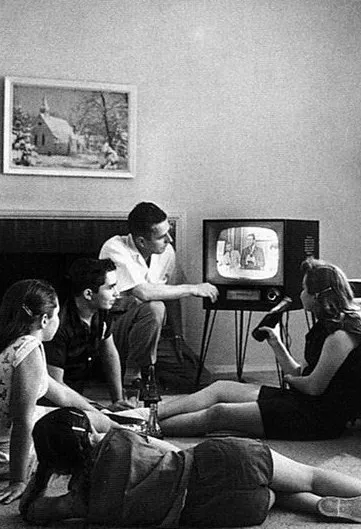
Photo: Evert F. Baumgardner, Public domain, via Wikimedia Commons
The first Saturday of November used to have a rhythm to it. Kettle on, heating argument resolved, and then the ad break everyone would be dissecting by Monday morning. For roughly fifteen years, Britain's biggest retailers ran an unofficial national competition to see who could make the country cry before the tree went up.
That competition is still running in 2026. It's just not running on your telly.
The ad break lost its monopoly on the moment
Christmas retail marketing in the UK was built on scarcity. One slot, one night, one shared audience, no algorithm in between. That scarcity produced a genuinely odd cultural artefact: the advert as event. People scheduled around it. Newspapers commissioned think-pieces about a supermarket's choice of soundtrack. The 90-second film was the product; the actual products were almost an afterthought.
The mechanics behind that are gone. Linear viewing keeps thinning, and the audience that remains skews older and less shoppable. Meanwhile the first festive content most under-35s see each year now lands in October, on a phone, from someone who isn't a brand at all. Retailers clocked this a while back. In 2026 the set-piece film hasn't disappeared — it's been demoted to the opening move in a far longer funnel, and the budget has followed it down.
What John Lewis-style storytelling looks like at nine by sixteen
The lazy version of this shift is to chop a 60-second spot into six vertical slices and post them. It reads like a trailer for something you will never be shown, and viewers treat it accordingly.
The campaigns that actually worked this year did something harder. They built episodic structure: recurring characters, a plot that advanced across a dozen posts, a running joke you had to follow rather than a single emotional beat you could absorb in one go. Less short film, more soap opera.
The craft differences are unglamorous but decisive. The hook has to land in the first two seconds, which means a face or a mistake — never a logo. The first frame has to work with the sound off, because captions carry the weight. The comments are part of the narrative rather than a moat around it. And the long cut still exists, usually as a 60- or 90-second version pushed on YouTube, BVOD and cinema, where it does a different job: credibility. It is the thing that makes the short stuff feel like it belongs to something.
There's an emotional trade-off here that nobody in a pitch deck likes to name. Horizontal storytelling earned its keep by giving a nation a shared three-minute cry. Vertical storytelling gives you identification instead of catharsis — a hundred small moments of "that's my mum" rather than one big one. It travels further. It just doesn't land as hard in a single hit.
The 2026 scorecard: what landed, what face-planted
A few patterns separated the winners from the rest.
What worked. Retailers who cast their own people. Shop-floor colleagues talking to camera about something they genuinely rate consistently outperformed scripted creator reads, because the hesitations read as honesty. Brands that treated creators as characters rather than billboards, giving them a premise and letting them improvise. Supermarkets that let value messaging be delivered by real shoppers doing a real shop — the "here's exactly what thirty quid gets you" format has quietly become the most effective piece of festive persuasion in the country. And anyone who committed to a posting rhythm from bonfire night through to the twenty-fourth instead of front-loading one hero asset and going quiet.
What didn't. The six-slice chop. Briefs that ran to forty pages and gave a creator three hours to shoot. Trend-chasing with no product link, where a brand jumps on an audio because it's "blowing up" in a context that has nothing to do with them, and the result is a corporation doing a dance. And undisclosed ads — the ASA has been consistent on this for years, and the CMA now holds direct enforcement powers under the Digital Markets, Competition and Consumers Act, which makes "we forgot the #ad" an unusually expensive sort of forgetfulness.
The uncomfortable bit: storytelling versus basket
Shoppable social has given retailers something television never could: a route from tears to checkout in one swipe. That's intoxicating, and it is also the fastest way to ruin a Christmas campaign.
The tension is old, but 2026 has sharpened it. Finance directors want a number. Last-click attribution flatters performance work and punishes brand work, marketing mix modelling is only as good as the assumptions fed into it, and nobody has ever been promoted for saying "this will pay back in three years." The honest position is that brand and performance are different jobs with different clocks, and merging them into one line item is how you end up doing neither properly. The retailers handling this well are the ones running them as separate briefs with a shared creative idea, rather than asking one piece of content to be both charming and conversion-optimised.
TV isn't dead, it's been demoted
It's tempting to write the obituary. Don't. Television still does something social cannot replicate: mass reach in a low-distraction room, plus a residual legitimacy that rubs off on whatever it touches. The Christmas spot survives — as the anchor asset of a campaign rather than the whole of it. Programme sponsorship, big-tent telly moments and the ad break itself all remain useful, partly because they generate the clips, stitches, duets and parodies that do the actual work afterwards.
So will the traditional TV ad survive another decade? Probably, in the way that radio survived television: as a format with real strengths, occupying a smaller share of the conversation. The cultural argument about Christmas advertising has already moved to platforms UK retailers don't own and can't schedule. The interesting question for 2027 isn't whether they'll make a film. It's whether they'll have the nerve to release it social-first, with television as the supporting act.
What to watch before the twenty-fifth
Three things. Whether the series formats can hold attention past mid-December, when everyone's feed turns into a wall of identical festive content. Whether the shoppable push converts browsers at the margin or just harvests people who were buying anyway. And whether any major retailer takes the plunge and inverts the release order entirely.
The Christmas ad hasn't left the building. It's just realised the building is no longer where the audience lives.