Ask Again Later: Britain's Brands Are Now Writing for the Model, Not You
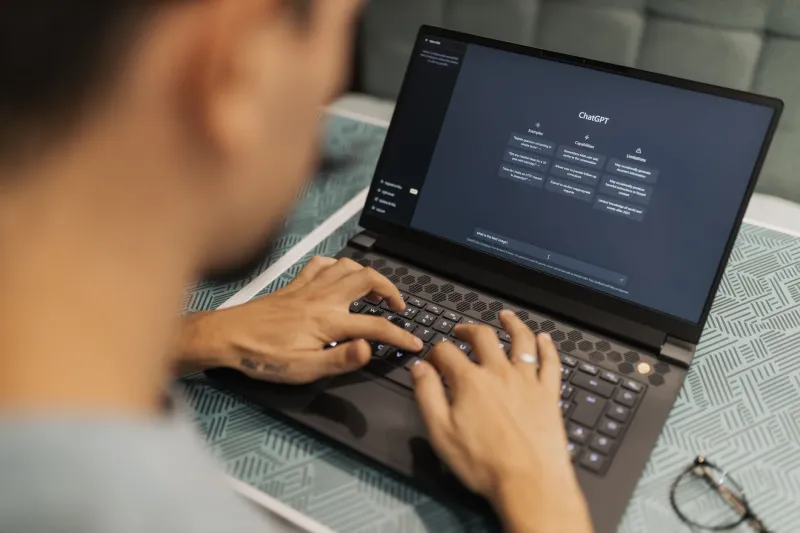
There's a particular kind of meeting happening in British marketing departments right now. Someone has opened ChatGPT on the big screen, typed "best UK bank account for a freelancer", and watched a polite paragraph appear. Then they've typed "best coffee subscription", then "cheapest way to send a parcel from Leeds", and somewhere in the third answer their own brand failed to show up. No blue link. No impression. No click. Just absence.
That meeting is now a budget line. Across Shoreditch, Manchester's Northern Quarter and a surprising number of spare rooms in Sheffield, agencies are flogging "AI visibility" — generative engine optimisation, answer engine marketing, large language model optimisation, pick your acronym. The pitch is simple: your customers are asking a machine for recommendations, and the machine is currently recommending someone else.
The retainer has a familiar smell
Here is what a lot of it actually is. Rewriting product pages into neat question-and-answer blocks. Pushing out comparison tables with your name in the first row. Seeding Reddit threads. Restructuring schema markup. Getting more client quotes into trade press. If you were doing SEO in 2016, you have done roughly 80% of this before, only last time there was a leaderboard at the end of it and a spreadsheet nobody was allowed to delete.
The problem is the leaderboard has gone. Ask the same question in the same chatbot two days running and you may get a different answer, because the system is responding to something that isn't your content — a freshness signal, a ranking bias, the fact that a competitor got a nice write-up in Which? last Tuesday. Ask it in incognito, on a phone, with a different phrasing, and the answer changes again. One agency I spoke to is charging a five-figure annual retainer and reporting success with screenshots. Screenshots. In 2026.
Ask a straightforward question — what did this spend actually generate? — and you get talk of "share of answer", "citation frequency", "sentiment in machine responses". All of which can be measured, sort of, by asking a language model to assess a language model. It's a bit like paying someone to taste your dinner and tell you whether you enjoyed it.
The brands getting mentioned aren't trying very hard
What's genuinely interesting is who does show up in these answers, and why. Watch it for a week and a pattern emerges that has almost nothing to do with optimisation.
The brands that get picked tend to have three things: a sentence someone else wrote about them, a reason to be singled out, and a voice. Greggs gets named because people write about Greggs with visible affection and a specific fact attached. Yorkshire Tea gets named because it has opinions and a reputation. A regional builder's merchant with 400 Trustpilot reviews and a genuinely helpful website gets named because it is unambiguously the answer to a narrow question.
Meanwhile the brand with a £60k content operation and a tone-of-voice deck that says "confident, warm, challenger" gets nothing, because there is no sentence anywhere on the internet that a stranger wanted to write about it.
An answer engine isn't judging your brand strategy. It's summarising the human writing that already exists and giving it back. Which means the entire discipline of being quotable — being the sort of company someone mentions in a forum unprompted, or in a review, or in a piece of local journalism — has suddenly become the highest-leverage marketing work in the country, and it looks identical to just being good and being talked about.
Who audits the taste?
Here's the question nobody selling this stuff wants to answer directly. When a model tells four million people which energy supplier to switch to, which camera to buy, which estate agent in Bristol to ring — who checks it?
The honest answer is: not really anyone. The systems are audited for safety, not for taste, and certainly not for whether the recommendation is any good. Nobody has run the randomised trial. Nobody can tell you whether the brand the chatbot favours is better than the one it ignores, or just better represented in the corpus.
And there is something distinctly uncomfortable about a country's shopping decisions being quietly shaped by which brands happened to get written about by the sort of people who write about brands. SEO at least had the decency to be obviously gamified. This wears a cardigan and speaks in complete sentences.
The homogenisation problem
There's a second-order effect that should bother marketers more than it currently does. If everyone optimises for the same answer engine, everyone starts to sound the same, and the engine — which is looking for clear, quotable, consensus-friendly claims — rewards the sameness. You end up with a nation of brands writing in tidy three-sentence summaries with a bulleted "key benefits" block, all converging on the same blandly confident register, all slightly indistinguishable from one another.
At which point the only brands that stand out are the ones that refused. The odd ones. The ones with a housestyle that would look strange in a schema field. The ones whose fans write forum posts at 11pm with a strong opinion and a specific reason.
Which is, if you squint, quite a nice ending. Optimise all you like — the machine can only repeat what humans bothered to say. Be worth mentioning. That's the whole strategy, and it's been the whole strategy since the first pub landlord recommended a plumber.
What to do with the pitch deck
If a stranger offers to get your brand cited by chatbots, ask three questions. Which specific prompts? How will we know if it worked, in numbers, not screenshots? And what happens to the retainer if the model changes and your name drops out next quarter?
Then go and read your own Trustpilot. Read the Reddit thread about your category. Find the sentence a real person wrote about you last month, and work out whether it's the sentence you'd want repeated back. If it isn't, no amount of restructuring will fix it — the machine isn't the problem. It's just holding up a mirror with a search bar attached.