The Sound of Nothing: Why British Brands Are Paying for Five Seconds of Silence
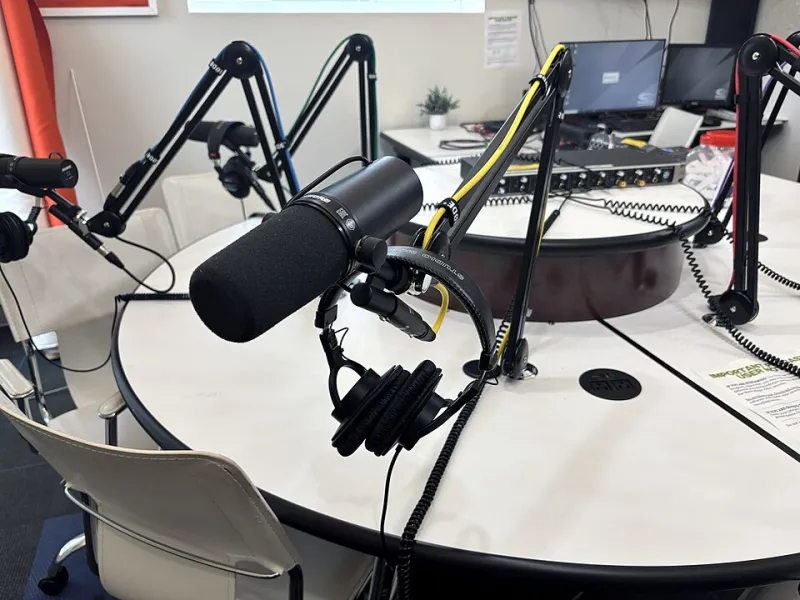
Photo: Myotus, CC BY 4.0, via Wikimedia Commons
A podcast host says one sentence. Then nothing. Six seconds of room tone, a fridge humming somewhere off-mic, and then the show carries on as if nobody had interrupted it at all.
That gap is the product. Over the past eighteen months, a small but conspicuously noisy corner of the UK audio market has been experimenting with what buyers are calling the "anti-ad" — a slot that consists of a bare brand mention, a scripted silence, and a clean handover back to the episode. No jingle. No offer code. No ninety-second host anecdote about how much they love a mattress.
The pitch is simple and slightly maddening: in a medium where everyone is shouting, the most valuable thing you can buy is a pause.
How you actually buy a gap
On paper, these are ordinary host-read sponsorships with the copy stripped back to a single ident. In practice, they're a different brief. The host reads one line — often no more than a name and a positioning phrase — and then the episode resumes without a transition. Some shows drop the pause in mid-flow; others place it at the top and lean on the silence as a kind of audio palate cleanser.
The production reality is fiddlier than it sounds. Dynamic ad insertion, which most UK podcasts now rely on, is built to drop a standard-length block into a slot. Building a five-second silence into a dynamic pipeline means either baking the moment into the master file — and losing the ability to swap it later — or accepting an insertion that sounds suspiciously like dead air to anyone who isn't in on the joke.
Several UK independents have gone the baked-in route, which tells you something about how they're treating the format: not as a performance buy, but as a brand association, sold more like a sponsorship credit than a response ad.
Why restraint is suddenly being sold as cut-through
The case for it rests on a reasonable observation. Podcast listeners have become extremely good at identifying and skipping the ad block — not necessarily with the skip button, but mentally. The moment the tone shifts and the host starts describing a service in the third person, attention drops.
A single line, followed by nothing, refuses to give the listener that cue. There's no ramping up, so there's nothing to tune out. Buyers experimenting with the format describe the goal in terms of "pattern interrupt" rather than recall, and they're noticeably coy about measurement, because the honest answer is that a five-second ident is difficult to attribute in any way a media plan will recognise.
What it does buy is a different kind of currency: an association with a show's tone. When a brand turns up as a single unadorned sentence in a programme people genuinely like, it borrows a bit of that programme's credibility. That's not a new idea — it's been the logic of arts sponsorship for decades — but it's unusual to see it sold at podcast scale.
The listener verdict so far
Reaction has been mixed in the way that all audio innovation is mixed, which is to say quietly. Podcast audiences don't post threads about ad formats. What they do is complain in reviews, and the early reviews of shows running the format have split roughly three ways: a minority who find it elegant, a larger group who assume the episode has buffered, and a vocal contingent who feel faintly insulted by being sold at so softly.
That third group is worth taking seriously. There's a fine line between restraint and being talked down to, and a scripted pause in a show you listen to on the Northern Line at 7am can land less like a gesture of respect and more like being winked at.
The compliance wrinkle nobody has ironed out
Here's the part that makes audio lawyers twitch. Podcasts sit in an odd regulatory pocket in the UK — outside Ofcom's broadcasting remit, but squarely within the advertising rulebook's expectation that commercial content be obviously identifiable.
A short ident does technically contain a brand name, so it's not covert. But the format deliberately removes all the signals listeners use to recognise an ad break: no music sting, no tonal shift, no length. If a listener can't tell where the advertising starts and stops, the fact that a brand was named four seconds ago may not be enough to satisfy the spirit of the rules.
The counter-argument, and it's a fair one, is that the pause is itself a signal — once you've heard it twice, you know exactly what it is. Which works beautifully for regular listeners and not at all for new ones, who are precisely the people reaching a show for the first time through a recommendation.
Expect this to become an issue the moment a big enough UK show adopts the format and a listener complains. Right now it's a curio. Curios have a habit of becoming precedent.
Niche flex or actual platform shift?
Honest answer: probably the first, with an outside chance of the second.
The format currently lives in a narrow band of the market — shows with strong host brands, loyal audiences and enough pricing power to refuse a standard read. That's a small group of UK programmes, and most of them are already sold out months ahead. For everyone else, a five-second silence is simply a five-second silence, and the sales team would rather sell ninety seconds that actually converts.
But there's a version of this that sticks. If audio measurement ever gets good enough to prove that a bare mention outperforms a full read on brand recall — and the early agency chatter suggests some buyers believe it might — then the anti-ad stops being a flex and starts being a rate card line item. The moment someone puts a premium price on the pause, the format has arrived.
Until then, it remains what it is: a small, well-mannered provocation from brands with podcast budgets and a healthy appetite for being talked about by people in podcasting. The most effective thing about it, frankly, might be this article. Which is a bit of a problem for everyone involved.